
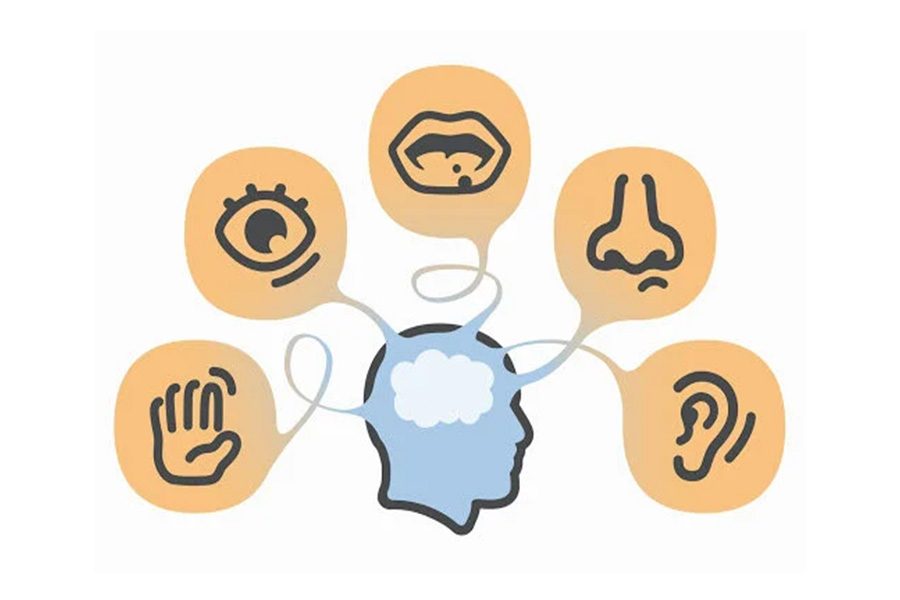
Our senses are responsible for the way we experience the world and the way we remember our experiences. The five basic senses are touch, sight, taste, smell and hearing. We all have different sensitivity levels, and some people won’t experience every sense because of illness, disability, medications, etc.
Anytime we are awake and alert, we are receiving information through our senses, and our brains are storing the information we are paying attention to. How long it is stored and our ability to retrieve the information is strongly influenced by how important it is and how closely we paid attention to it;. Repetition also plays a factor in memory retention.
If your grandmother baked chocolate chip cookies every time you visited her as a child, there’s a good chance that the smell of chocolate chip cookies will conger up memories of her. The same thing happens with a song we hear, or a photograph, or a particularly soft sweater. Our senses are very good at provoking our stored memories.
Generally, this is not something we have consciously made happen – we didn’t consciously decide to store the smell of Grandma’s cookies, our senses and brains did it for us. However, research shows that we can train ourselves to be more attuned to our senses and use them to enhance our ability to retain information. This works great for making a “mental list.” If you need a few things at the store but you don’t have a written list, use your sense-of-choice to implant it better in your memory – say the words out loud so you hear them, or picture the items in the store, imagine holding on to it. Being intentional about implanting sensory information with your memory greatly increases the chances of recalling it.
Anytime you are forming memories you are much more likely to hold on to the memory longer if you store your sensory info with it. If you are having a picnic with your grandson and you really want to hold onto that memory, be conscious of the sensory inputs around you – what is the weather, and how does that feel? What are you eating — what are the tastes and smells of the food? What are the surroundings – the sights and the sounds around you? By intentionally noting these sensory details you are much more likely to not only remember the event but remember it in detail.
Consciously considering our sensory input is not always automatic, but you can hone your sensory skills by practicing. Here are a few exercises you can incorporate into your daily routine to help develop your senses:
- Sight: Create a simple scavenger hunt to look for particular things on your next walk. A game of eye-spy with your grandkids is fun for them and sharpens your sense of sight.
- Smell: Take time to smell your food before you eat it — how many different aromas are on your plate? Visit the cologne department in store and evaluate the qualities of several different scents.
- Taste: Buy a variety pack of some type of food you enjoy and taste each one while closely evaluating the differences and identifying what it is you do (or don’t) like about each one. When you are eating alone (undistracted), take the time to focus on the different flavors of the foods.
- Hearing: Find a comfortable place to sit outdoors (indoors works too) close your eyes and note each different sound you hear and where it is coming from. Put on some music that you don’t know (which is less distracting) and listen to the sound of each instrument, see if you can separate the sound of each one.
- Touch: When folding laundry, feel each garment and think about the texture and qualities of the fabric. If you have a pet, you can both enjoy exploring its fur and how it’s different in places.
By practicing your attention to sensory input, it will become more automatic and in the long run it will help to improve your memory.